


This is a set of photographs taken during a couple of weeks I took out in the Western Isles last summer. I have only now had time to go through the shots as I have been in the field non-stop since. Now that I am back in Canberra I am busy monitoring the Tawny Frogmouths in my study area. It is ironic that I seem to upload fewer posts when I am busy out studying wildlife.

This is on the Atlantic shore of Lewis, the wild side, with big waves and a rough coastline.

Dry stone walls, over a metre thick were infilled with turf to isolate the inhabitants from the wild Atlantic wind.


The only sounds were the soft sis of the wind through the grass and the distant sis of the waves rolling sand up and down the beach below.

What a site the iron age builders chose for this magnificent stronghold. Location, location, location.

Even older than Dun Carloway, these stones were erected in the Bronze Age. The site they stand on in the quiet western moors of Lewis is so atmospheric with views for miles and miles - the more famous Stonehenge is surrounded by busy cross-country roads. Location, location.

This was once one the quietest beaches in Harris, but now it is covered by footprints. I went there late in the evening to avoid the heavy traffic out to the end of the twisting single track road during the day.

A quite sheltered inlet of the larger Loch Seaforth. Who once lived in that cottage, was anyone ever born there? Island life has changed, has always changed and will always change.

I have been to this spot many a time and seen it in all types of weather; snow, wind, rain and sunshine, but even I had to stop and take one more photograph this day. The light was so stunning.

Sheep are a vital part of life in the Western Isles, their wool is made into Harris Tweed. And the sheep gates are part of island life too. I will upload a set of photographs of the variety of sheep gates on my ByMyEy blog site soon.

There are scores of islands in the Western Isles archipelago, so boats and ferries are a necessary part of island life. And a great way to see wildlife.

Many of the islands are mere skerries, and a multitude of rocks hide below the surface. So, the ferry takes a long meandering course through the maze, providing me with great views of terns, gannets and guillemots fishing, seals lying up on the rocks and an otter scampering over a skerry.

Open skies, seascapes and miles of open hill to roam over. A true wild place.

These hills, moors and lochs provide habitat for thriving populations of golden eagles, white-tailed sea-eagles, hen harriers, short-eared owls, red-throated divers and otters.

Generations of islanders' remains lie beneath these rows of lichen-clad headstones. A high wall surrounds the ground to keep the sheep out and the grassy sward is speckled with wild flowers. Skylarks fill the air.
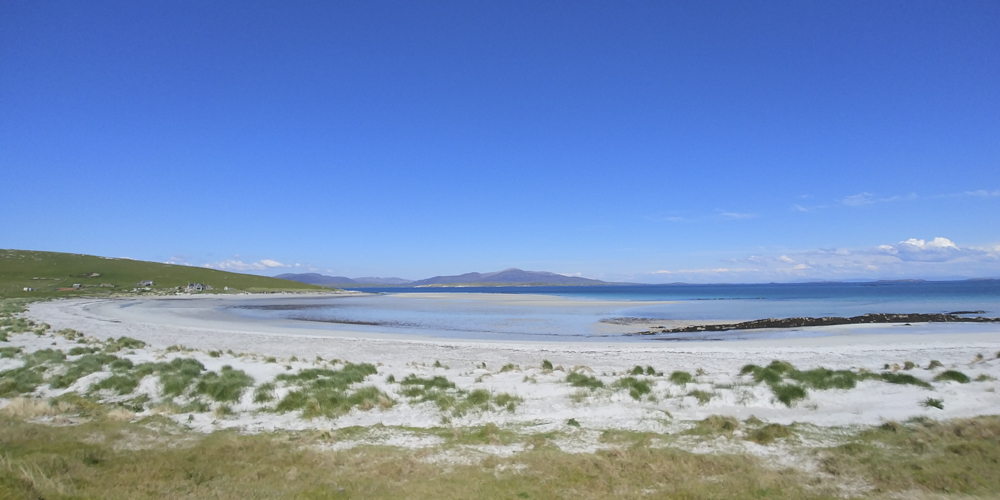
The beaches on the eastern, sheltered side, of the islands are calm, shallow-pitched and they form good habitat for waders, such as ringed plover, which nest up between the spring tide-line and the soft machair, the rich sand-based grasslands of the islands.

There were hooded crows nesting on the ramparts; lapwing, redshank, ringed plover, curlew and oystercatcher all had chicks hiding in the grasses and sedges, and a corncrake was calling from the iris beds.

Grey and common seals swim here and lie up on the rocks at low tide. Otters swim by too.
The trill of oystercatchers is the morning chorus.
Thank you Al and Jo for your wonderful hospitality.


